







5th ParlaTIC Congress at the Spanish Senate
AI is already changing how software gets built, public institutions included.
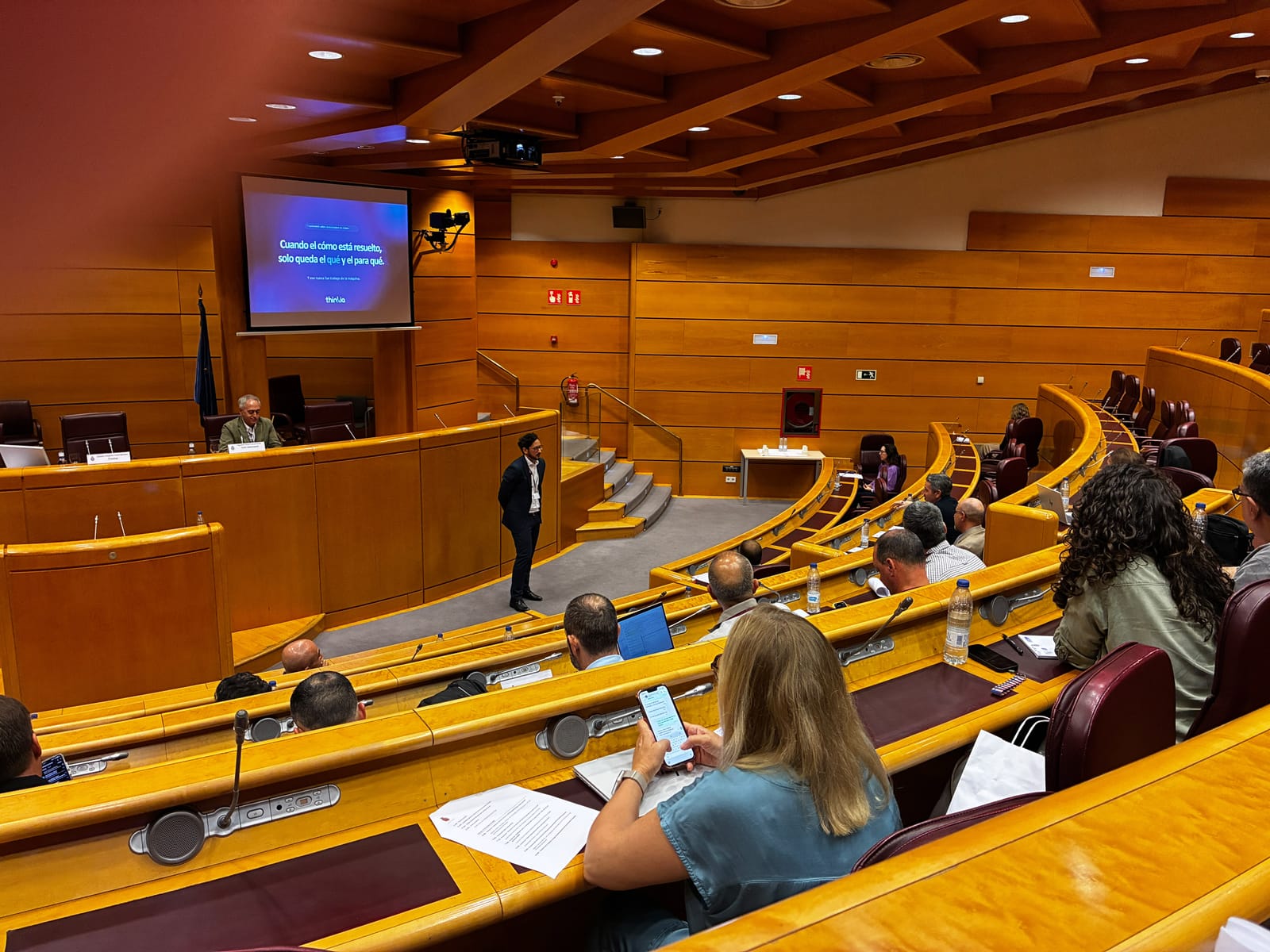
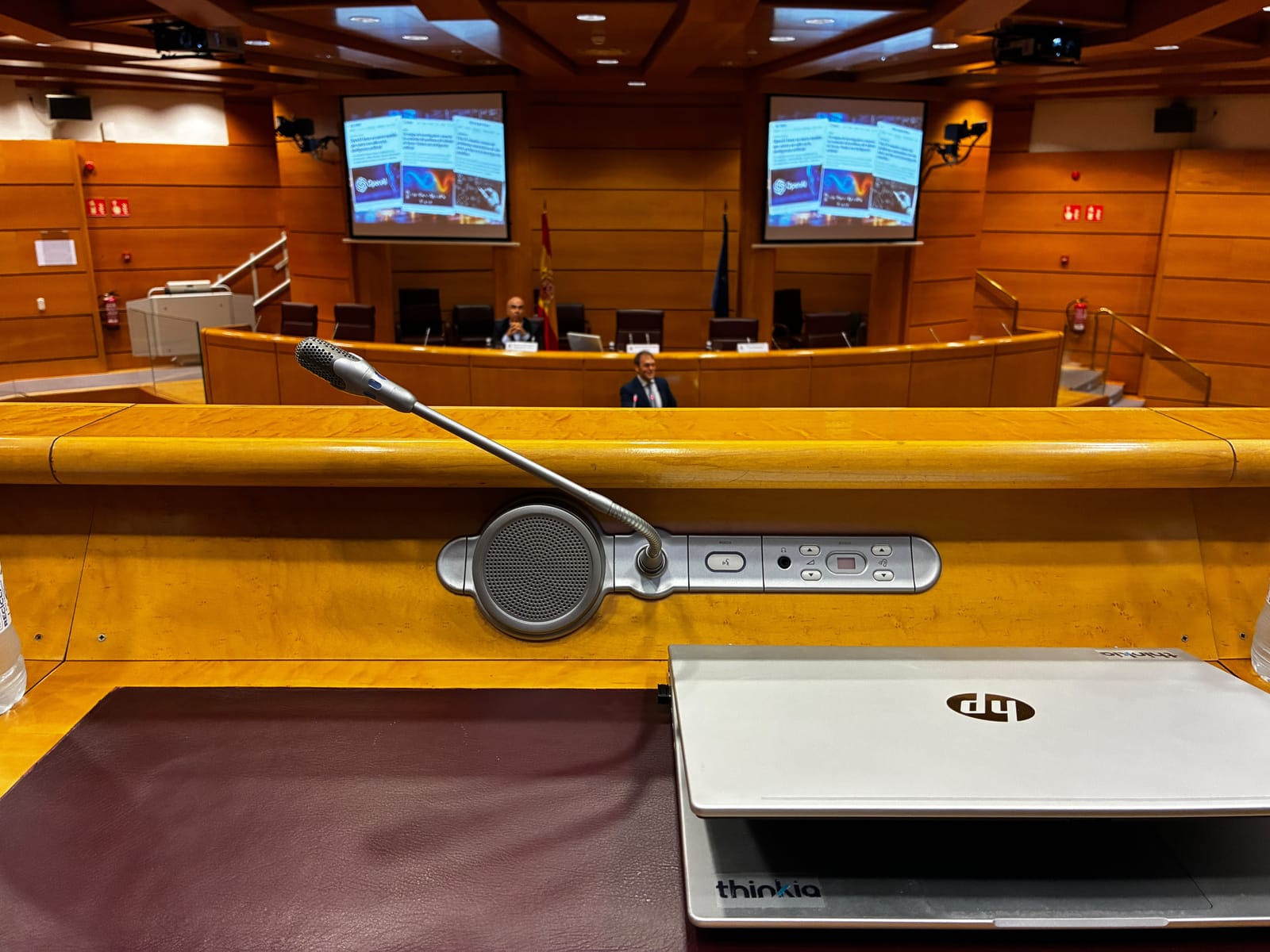
On 15 and 16 October 2026, the Spanish Senate hosted the 5th ParlaTIC Congress, the association of IT, communications and audiovisual professionals from Spain’s parliaments, the Cortes and the regional legislative assemblies. This year’s theme: the challenges of applying artificial intelligence in parliaments.
Our talk
- When: Friday 16 October, 11:15
- Who: David Alejano, Chief Strategy & Innovation Officer at Thinkia
- Title: From code to intent
David opened with an uncomfortable question: if we now build in an afternoon what used to take a quarter, why does it still take just as long to reach production?
His answer walked through six stages of maturity, from manual development to supervised autonomy, and one fork in the road: vibe coding is fast and ungoverned, fine for testing an idea in an afternoon and unfit for a system people depend on. Most organisations have settled one stage earlier, at specifications, and run into three limits there: the agent sees the file but not the circumstances around it; nobody can explain why any given line of code exists; and we generate far faster than we review. Three symptoms of what David called comprehension debt — producing code faster than we are able to understand it.
The leap, he argued, is not another tool. It is treating the specification as a living system rather than paperwork: a thread connecting the business need to the line of code, one that does not stop where the code begins but where measured value begins — deployment, observability and metrics included. With one governance condition: the verdict always comes from an objective tool, never from the agent itself, and a person signs off at the end of every flow.
The closing returned to the start. We have spent years accelerating the how; once the how is solved, all that remains is the what and the why — and that was never the machine’s job.
The programme
Two days of talks from the Senate itself, the Cortes Generales, regional parliaments and industry.
Thursday 15 October
- AI usage guidelines at the Senate: general context and main orientations — Pablo García Mexía, counsel to the Cortes Generales.
- Using AI for transcription, subtitling and cataloguing of audiovisual content — Antonio León Carpio, CEO of Etiqmedia Soluciones Audiovisuales.
- AI in the parliamentary audiovisual environment — Jacinto Mateos Fernández, head of audiovisual media and new technologies at the Assembly of Extremadura.
- Legislative intelligence to govern the future — Borja Colón de Carvajal, head of public administration and innovation and chair of the AI governance committee at the Provincial Council of Castellón.
Friday 16 October
- Use cases for AI in international parliaments — Manuel Pereira González, director of information and communications technology at the Spanish Senate.
- From code to intent — David Alejano, Chief Strategy & Innovation Officer at Thinkia.
- Approaches to information retrieval beyond RAG systems — Francisco Sobrino Bescós, systems analyst at the Cortes of Aragón.
- How to defend ourselves against hostile uses of AI — Antonio Sanz Alcober, Head of DFIR at S2 Grupo.
The Senate broadcast both days and keeps the full recordings on its channel: Thursday 15 October and Friday 16 October, the day David spoke. The video on this page is a summary; the full talk is in Friday’s recording.
Thank you
Our thanks to Pablo García Mexía, Antonio León Carpio, Jacinto Mateos Fernández, Borja Colón de Carvajal, Manuel Pereira González, Francisco Sobrino Bescós, Antonio Sanz Alcober and Agustín Cernuda, and to everyone who made these two days possible.
Gallery